

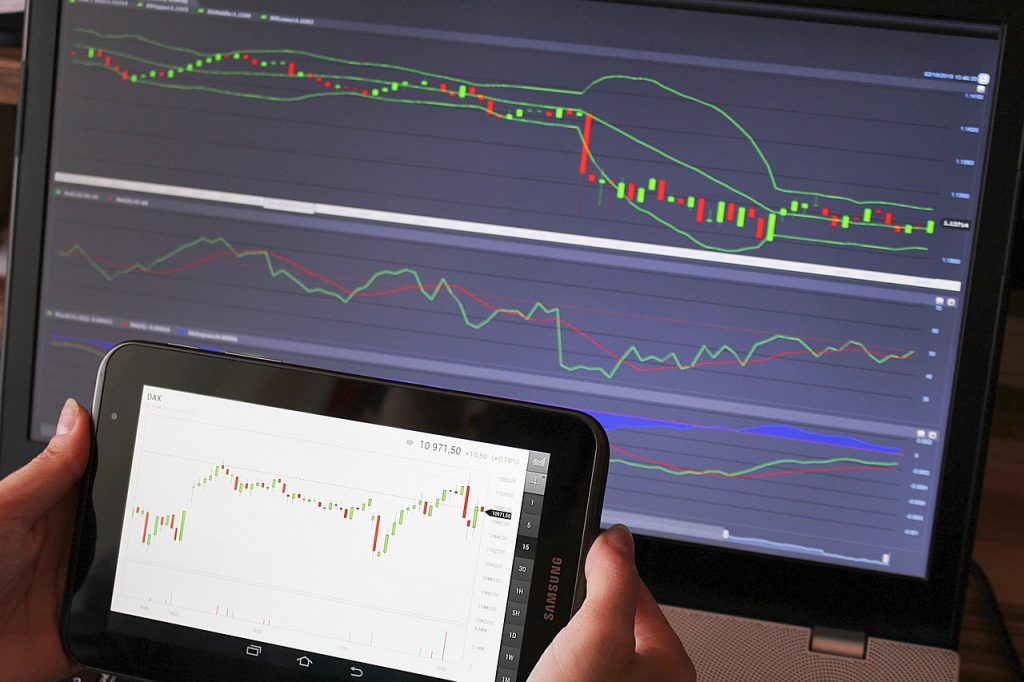
What really drives the forex market? This is a question that is difficult to answer especially due to the complexity of the forex market and all the variables that influence the quotations of a currency.
We believe it could be useful to understand the strengths that move the currency market and also to give an answer to the classic question “how to trade on the forex market”.
The premise of a trade is an intense educational activity also based on learning the variables that can influence the success (or the failure) of the trade.
We believe that, in order to satisfy the aim of understanding the market, it may be useful, more than any intensive training on the forex, to study this chart extracted from a Bloomberg & Rosenberg study of 1996 entitled “Currency Forecasting”.

Long term, medium term and short term factors
To get to the end of the flow chart, the trade on the market, there are many factors to consider. If we are long-term investors then we will try to deepen the analysis of the long term factors, if instead we are used to trading in the short term, we will focus on short term factors.
It is evident that the amount of information to be reprocessed is so high that it makes daily trading operations based on these factors practically impossible; for this reason the technical analysis effectively reduces all these elements to a concept of statistical frequency linked to price movements.
However, the importance and weight of some factors cannot be neglected in a trading activity. It is obvious that for a currency with a high trade deficit, the timing of macroeconomic data and in particular those related to exports and imports cannot be ignored.
Another example: a country with rising inflation will be affected by this dynamic monetary policy and in this case it will be appropriate to take into due consideration the dates (and subsequent statements) of the meetings of the central bank of that country.
As in the first case, a difficulty on the export data will confirm a competitive currency devaluation policy like the one adopted in the past by Japan, for example. In the following example an increase in interest rates could represent a factor capable of strengthening the currency under analysis.
One more example. The weekly data provided by the Cot Report elaborated by the CFTC must be carefully analysed for forex trading, since with these numbers it is possible to bring out excesses of positive or negative sentiment on a specific currency. Very often these excesses can be exploited in a contrarian optic to make profitable operations. This consideration is linked to the fact that when the speculators are all oriented in one direction, an unforeseen event is enough to violently reverse the trend.
In conclusion, in order to answer the initial question “What really drives the forex market?”, we can confirm that you will need a lot of study, preparation, flexibility and the ability to select the right information. A successful trader should never be distracted by easy gains of automated tools (such as forex robots), but instead he should concentrate on creating a trading system taking into account the surrounding environment.

