

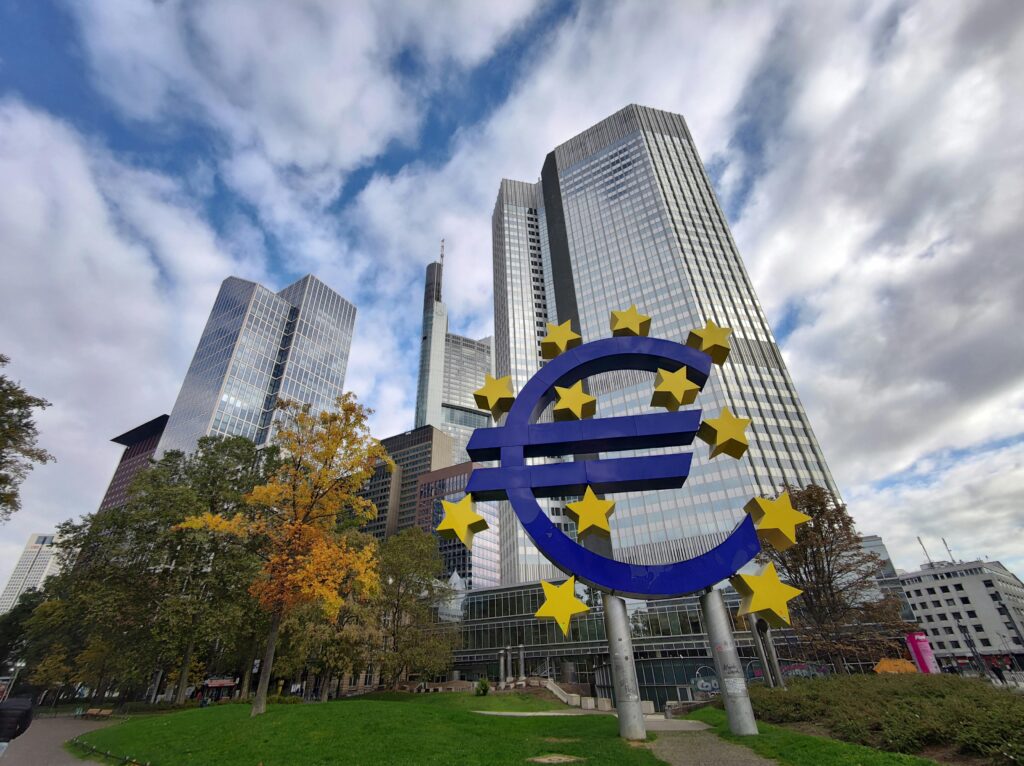
A recent paper from the European Central Bank (ECB) presents a critical view of Bitcoin, focusing on wealth redistribution and potential societal impacts.
The key argument is that Bitcoin, even in a “positive” scenario where its price continues to rise, leads to the enrichment of early adopters at the expense of later participants and non-holders. According to the paper, this dynamic fuels economic disparity and could deepen societal divisions.
The paper argues that Bitcoin’s rising value doesn’t increase overall economic productivity, comparing it to a zero-sum game. Essentially, the wealth gained by early Bitcoin holders, symbolized by flashy purchases like Lamborghinis, comes from the diminished consumption of those who invest later. This redistribution, they claim, has long-term negative consequences, leading to a widening gap between the “haves” and “have-nots.”
Additionally, the central bank highlights concerns about Bitcoin’s energy consumption and its role in facilitating illicit activities. It suggests that, despite Bitcoin’s promise of financial independence, its price remains susceptible to government regulation and political forces, which undermines the core ethos of decentralization.
In response, the paper advocates for non-holders and latecomers to oppose Bitcoin-friendly policies, warning that Bitcoin’s rise could lead to greater social division and economic imbalance. However, this perspective is rooted in a misunderstanding of both Bitcoin’s purpose and the underlying dynamics of market behavior. Let’s dissect the main claims and offer a Bitcoin-supportive rebuttal to the central bank’s concerns.
1. Redistribution of Wealth and Social Impact
The paper argues that Bitcoin’s rise in value benefits early adopters at the expense of later participants or non-holders, framing this as a zero-sum game. This perspective, however, overlooks the broader context of technological innovation and wealth creation in free markets. In virtually every major innovation – from the internet to smartphones – early adopters tend to benefit more than those who come later. This is not unique to Bitcoin.
Rather than viewing wealth accumulation through Bitcoin as “draining water from another bucket,” it’s more accurate to consider Bitcoin as an opportunity for wealth creation. The rise in value stems from Bitcoin’s growing utility and increasing demand as a global store of value. Bitcoin represents a fundamentally new asset class, decentralized and scarce, that challenges the traditional monetary system. Like gold or real estate, those who acquire it earlier benefit more, but this does not necessarily mean others are being harmed.
2. Wealth Creation vs. Zero-Sum Thinking
The central bank’s article treats Bitcoin as if it adds no production value to the economy. This static view neglects the potential benefits of decentralized finance, the democratization of wealth access, and the financial sovereignty that Bitcoin provides. Bitcoin’s decentralized nature gives billions of people in underbanked regions access to financial tools, mitigating the failures of inflation-prone currencies and unreliable banking systems.
Bitcoin enables people to hedge against economic instability, government overreach, and the devaluation of traditional currencies. For many, particularly in countries with hyperinflation or authoritarian regimes, Bitcoin provides a lifeline. To argue that Bitcoin is merely an instrument of wealth transfer from non-holders to holders ignores this critical aspect of global economic empowerment.
3. Latecomers Aren’t Doomed
The idea that late adopters are bound to lose is overly simplistic. Bitcoin’s market is volatile, but this volatility offers opportunities for both short-term and long-term gains. Just like the stock market, timing can be crucial, but holding Bitcoin over the long run has historically been beneficial even for those who bought in later. More importantly, the central bank’s critique doesn’t address the historical precedent of most technological adoption curves. Those who recognize the value of an innovation—early or late—stand to benefit.
Additionally, Bitcoin adoption isn’t a closed loop where only early adopters gain. The continued expansion of the Bitcoin ecosystem (via the Lightning Network, smart contracts, decentralized finance, etc.) adds new layers of value. The creation of jobs, new financial products, and services within the cryptocurrency sector shows that Bitcoin’s impact isn’t limited to speculative trading.
4. Energy Consumption and Illicit Activity
The central bank’s critique also highlights the energy cost of Bitcoin mining and its use in illicit transactions. While these are valid concerns, they are often exaggerated. First, Bitcoin mining incentivizes the development of renewable energy by providing a flexible, decentralized demand for power, which can stabilize grids and make use of excess renewable energy. Recent data shows that a significant portion of Bitcoin mining is now powered by renewables.
Furthermore, the association with illicit activities, while not insignificant, is dwarfed by the use of traditional fiat currencies in criminal enterprises. The transparency of Bitcoin’s blockchain makes it much easier to track suspicious activity compared to cash. Regulatory frameworks are also improving, helping mitigate risks tied to illicit usage.
5. Bitcoin’s Lack of Intrinsic Value
A key critique is that Bitcoin lacks intrinsic value, and that its price is subject to speculative bubbles. Yet, intrinsic value is a concept that evolves with society. Gold, too, lacks intrinsic value in the sense that it is valuable only because we agree it is. Bitcoin, through its design—being decentralized, scarce, and secure—has created a new form of value. Its utility as a censorship-resistant store of wealth, a hedge against inflation, and a permissionless system for peer-to-peer transactions is increasingly recognized, which explains its rising demand and price.
6. Government Regulation and Bitcoin’s Independence
The article argues that Bitcoin’s price depends on government regulation, which undermines its independence. This is a paradoxical claim. While Bitcoin is subject to regulatory pressures, it exists outside the direct control of any government. Its decentralized nature ensures that no single entity can manipulate its supply, unlike fiat currencies. Regulation may affect adoption rates, but Bitcoin’s core value proposition—offering financial sovereignty—remains intact.
7. Democratization of Finance
What the article fails to acknowledge is that Bitcoin is more than just an investment vehicle—it’s a tool for financial empowerment. In traditional banking, entire populations are excluded from accessing the global economy due to geography, politics, or socioeconomic status. Bitcoin levels the playing field, offering anyone with internet access the ability to participate in global finance. This decentralized, permissionless nature is why Bitcoin is so revolutionary.
The central bank’s critique of Bitcoin overlooks key aspects of its utility and global importance. Rather than being a zero-sum game that impoverishes latecomers, Bitcoin represents an open and growing opportunity for wealth creation and financial autonomy. While early adopters may gain more, this is true of any revolutionary technology. The broader social value of Bitcoin lies in its ability to democratize finance, protect against inflation, and provide a decentralized alternative to traditional monetary systems.
Yes, Bitcoin comes with risks, but these risks are inherent in any form of financial evolution. The world is already embracing decentralized finance, and it is essential to approach Bitcoin not as a threat but as an opportunity for growth and positive societal transformation.
Learn about bitcoin in our free bitcoin course.

